We are building the missing layer of the internet.
BEACAN is the verification protocol for biological human origin. We are building the layer of the internet that lets the receiving party of any communication ask one question and get a verifiable answer: is this a human?
The internet was built on the assumption that the entities communicating over it are human. That assumption was implicit, never verified, and now broken. Voice cloning takes three seconds of audio. Generative video produces convincing synthetic humans from a single headshot. Bots are now nearly half of internet traffic. The defenses we have were designed for a world where "human" didn't need verification. We are building the layer for the world that exists now.
Humans produce involuntary biological signals that synthesis cannot reliably replicate. Cognitive load patterns under semantic processing. Prosodic confusion when reading nonsense. Heart rate variability correlated with speech production. Pupillary response to visual stimuli. Each signal is a layer the synthetic must replicate in real time, in coordination, while also producing the response. The harder we make the challenge, the wider the gap.
BEACAN is designed to be a standard, not a product. The validator is open-source. The certificates are independently verifiable. Our long-term position is the same one HTTPS holds in transport security — infrastructure deployed across the internet by every party that needs it, not owned by any single platform.
We are pro-transparency, not anti-AI. AI agents have legitimate uses. The BEACAN Disclosed framework lets agents voluntarily identify themselves while ensuring biological humans have a way to prove they are not synthetic. The goal is not to suppress AI — it is to make origin verifiable so trust can adapt.
Founders
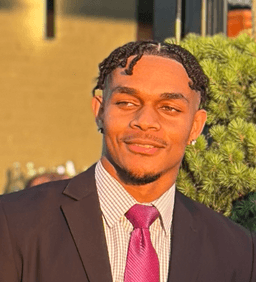
- BS Computer Science and Neuroscience (Computational), Johns Hopkins, 2023.
- Software Engineer at JPMorgan Chase, selected for the firm's top 10% early-career engineering cohort.
- Published in the Journal of Alzheimer's Disease on the relationship between brain imaging biomarkers and cognitive decline.
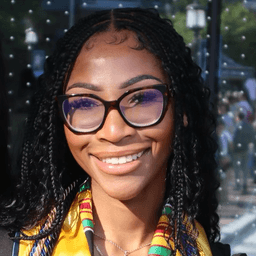
- MD candidate at Harvard Medical School (HST track, joint with MIT).
- BS Neuroscience (Systems) from Johns Hopkins, departmental honors.
- Published in Frontiers in Physiology, Journal of Neurooncology, The Spine Journal.
- Direct biomedical signal processing experience including phase-amplitude coupling analysis on sEEG microwire electrodes at Johns Hopkins School of Medicine.